

How much does a law firm website really cost in 2026? Compare published agency prices, understand custom website expenses, explore budgeting scenarios, and learn how to choose the right website for your legal practice.
A law firm website can cost less than $100 a month if you build it yourself—or more than $20,000 when you hire an agency for custom design and development. That is a substantial difference, particularly if you are opening a new practice or replacing a website that no longer meets your needs.
The good news is that you do not need to choose a budget blindly. Understanding what goes into a website quote makes it easier to decide what to pay for, what to postpone, and which features your firm actually needs.
Use our Law Firm Website Design Cost Calculator to explore an estimated budget, then compare it with the published agency prices and practical advice below.
How Much Does a Law Firm Website Cost in 2026?
Law firm website design cost depends mainly on whether you choose a DIY platform, a professionally customized template, or a fully custom project.
Here are published pricing examples from established legal website providers.
| Provider | Website Type | Published Price |
|---|---|---|
| Clio | Basic DIY/template sites | $15–$100+ monthly |
| The Modern Firm | Simple website | Starting at $2,950 |
| PaperStreet | Essentials template website | Approximately $3,000–$5,000 |
| Dan Gilroy Design | Single-page custom website | $3,000–$3,500 |
| The Modern Firm | Guided website | Starting at $7,500 |
| Dan Gilroy Design | Complete custom website | $8,000–$16,000 |
| PaperStreet | Custom design | Approximately $18,000–$25,000 |
| PaperStreet | Enterprise website | $40,000–$100,000+ |
These are provider-specific published prices, not an industry-wide average. Packages vary in their inclusions, exclusions, billing arrangements, and ongoing fees.
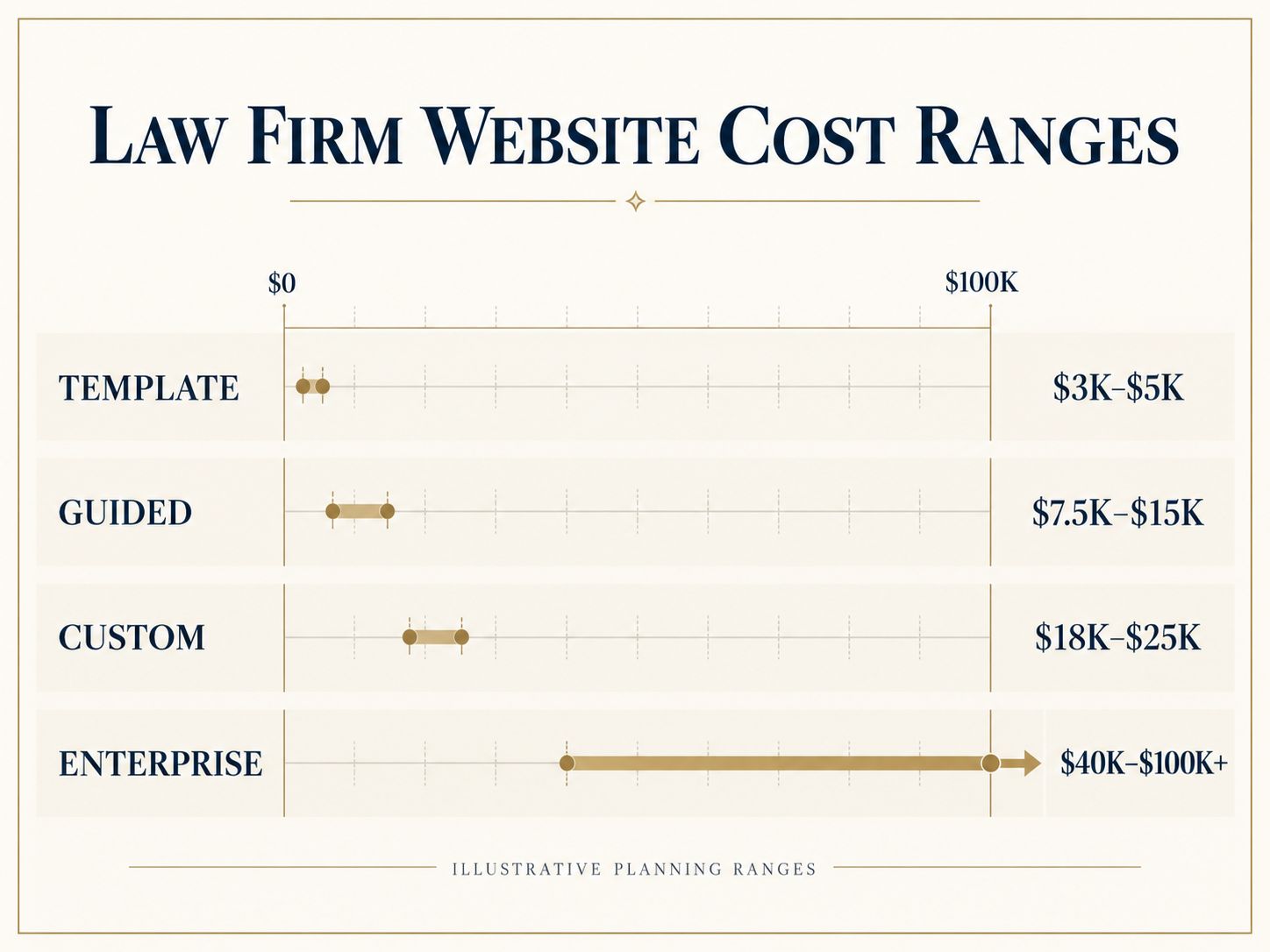
An important detail: PaperStreet describes its Essentials package partly in terms of first-year cost. Comparing it directly with a one-time design quote without examining the agreement could lead to a misleading conclusion.
For additional pricing details, consult Clio’s attorney website budgeting guide and PaperStreet’s 2026 website pricing breakdown.
Free Law Firm Website Design Cost Calculator
The calculator should let you choose your website type, number of pages, unique designs, attorney biographies, content requirements, and optional integrations.
It should show three results:
- Estimated initial project cost
- Estimated annual operating expenses
- Estimated total cost over the first three years
These figures should be labeled as planning estimates. A website with ten pages does not necessarily take twice as much work as a five-page site.
The distinction matters because agencies often reuse page templates. Once a designer has built an attorney biography layout, creating additional profiles may require content preparation and testing without requiring an entirely new design.
Use the calculator to prepare a scope for potential suppliers, not as a replacement for written quotations.
What Makes One Law Firm Website More Expensive Than Another?
Imagine two five-attorney firms requesting a website redesign.
The first wants a professional homepage, five attorney profiles, a handful of practice area pages, and a contact form. The firm provides its own written content and does not need to transfer an existing blog.
The second needs the same basic pages, but also wants professionally written content, several unique page layouts, appointment scheduling, and migration of an established website.
The second project involves considerably more work—even though the firms are similar in size.
Custom Design Versus Templates
Templates reduce development effort because the designer starts with established page structures.
Custom design offers more freedom. That matters when a firm needs distinctive branding, specialized navigation, or functionality that a standard layout cannot accommodate.
But custom is not always better.
If your website primarily helps people who received your name through a referral confirm your credentials and contact information, a professionally configured template may serve you perfectly well.
If your firm operates across several locations and wants to grow through organic search, the website’s content architecture and expandability deserve more attention. You can explore additional considerations in our website architecture resources.
Content Preparation
Do not overlook the time required to produce accurate attorney biographies and practice area descriptions.
Someone must verify credentials, review claims, approve photographs, and ensure the content matches the firm’s actual services.
Some web design agencies include this work. Others expect the law firm to provide final text before development begins.
Ask about content responsibility before accepting a quote.
Unique Page Templates
A page and a design template are not the same thing.
For example, a website might contain 30 attorney biographies using a single reusable layout. Another might contain just eight pages, each requiring a different design.
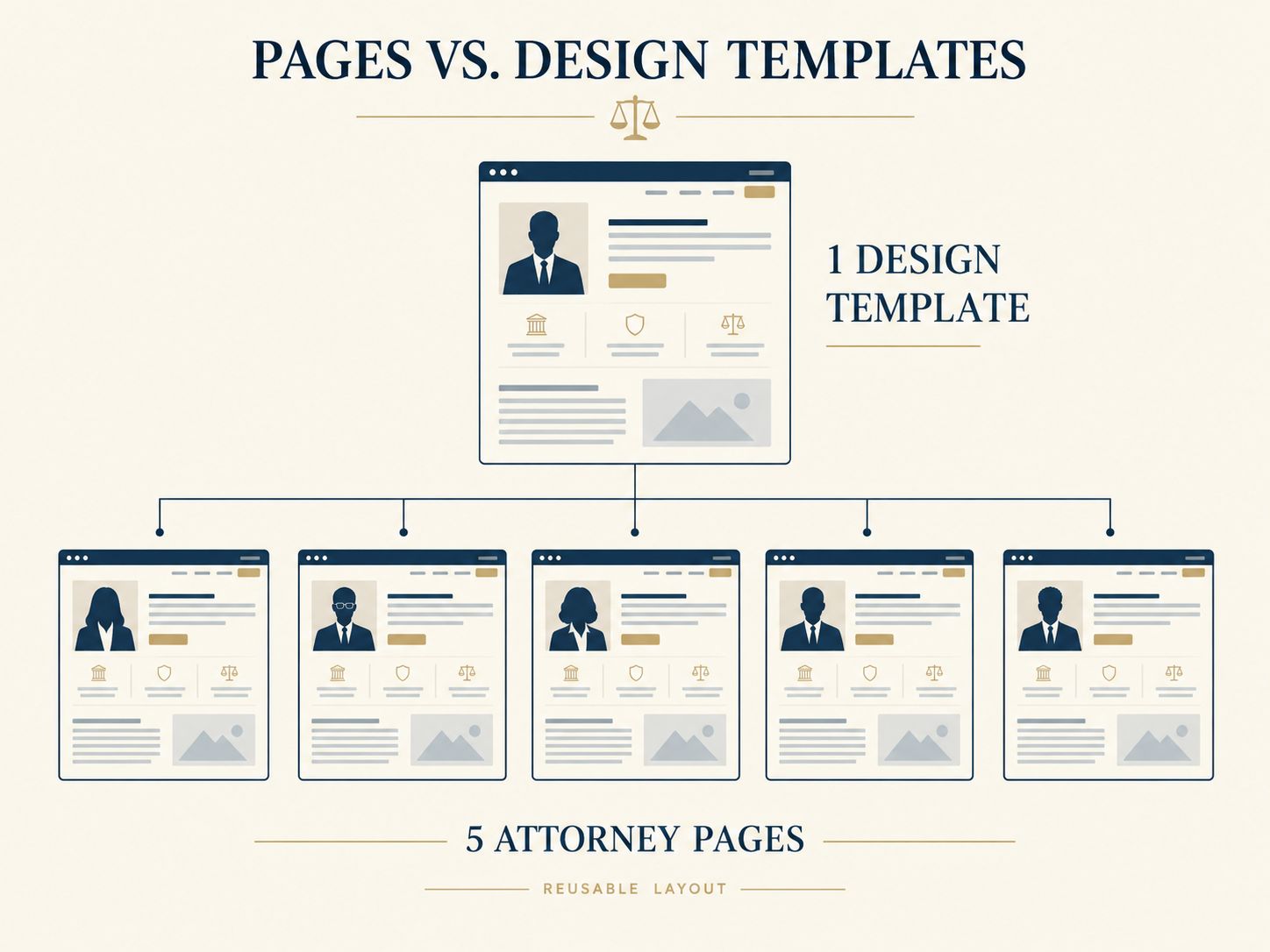
This is why a simple page-count pricing model is an imperfect way to estimate development costs.
Integrations
Booking tools, client intake systems, and practice management integrations can change both development costs and ongoing expenses. For more detail about connecting forms and business systems, see our guide to landing page builder and CRM integration.
Before commissioning custom functionality, check what your existing legal software already provides.
Building a separate document portal may be unnecessary if your current system already offers secure client access.
Website Migrations
Redesigning a website that already receives inquiries involves additional responsibilities.
Existing URLs, content, rankings, contact forms, tracking systems, and referral traffic all need consideration.
For businesses planning a platform change, WebPlatformLab’s website migration resources provide additional background on CMS selection and technical planning. Our article about 301 redirects and their SEO implications also covers an important part of website migrations.
Three Law Firm Website Budget Scenarios
The following are hypothetical planning scenarios, not actual client invoices.
A Solo Attorney Launching a New Practice
Illustrative initial budget: $3,000–$5,000
A sensible scope might include five to eight pages, one attorney biography, practice descriptions, a contact form, a mobile-responsive design, and basic search setup.
The most important goal is credibility. Visitors should quickly understand what the attorney does, where they practice, and how to get in touch.
A simpler website can be the right decision if the firm has little content and no immediate need for advanced functionality.
A Growing Five-Attorney Law Firm
Illustrative initial budget: $8,000–$18,000
The firm may need multiple practice area pages, reusable biography layouts, consultation scheduling, content assistance, and greater control over its branding.
This type of project benefits from careful planning before design begins.
The firm should think about future growth: adding attorneys, opening offices, publishing resources, and updating services without rebuilding the site.
A Large Multi-Office Practice
Illustrative initial budget: $25,000–$75,000+
A larger firm may need multiple unique templates, an extensive attorney directory, office-specific content, multilingual publishing, a significant migration, or connections to existing business systems.
In this case, website architecture and content management may consume as much planning effort as visual design.
The best proposal will explain those requirements rather than hiding them inside a single large price.
What Does a Law Firm Website Cost After Launch?
Website ownership comes with recurring expenses.
Hosting, domain renewal, software licenses, maintenance, backups, and technical support may all require ongoing payments.
For early planning, you can use the following allowances, but verify actual prices with your supplier.
| Expense | Illustrative Annual Allowance |
|---|---|
| Domain registration | $15–$40 |
| Hosting | $120–$1,200+ |
| Maintenance and support | $600–$3,600+ |
| Premium software | $0–$600+ |
| Ongoing content and SEO | Quoted separately |
A managed website package may include hosting, updates, backups, and support. Do not count those expenses twice.
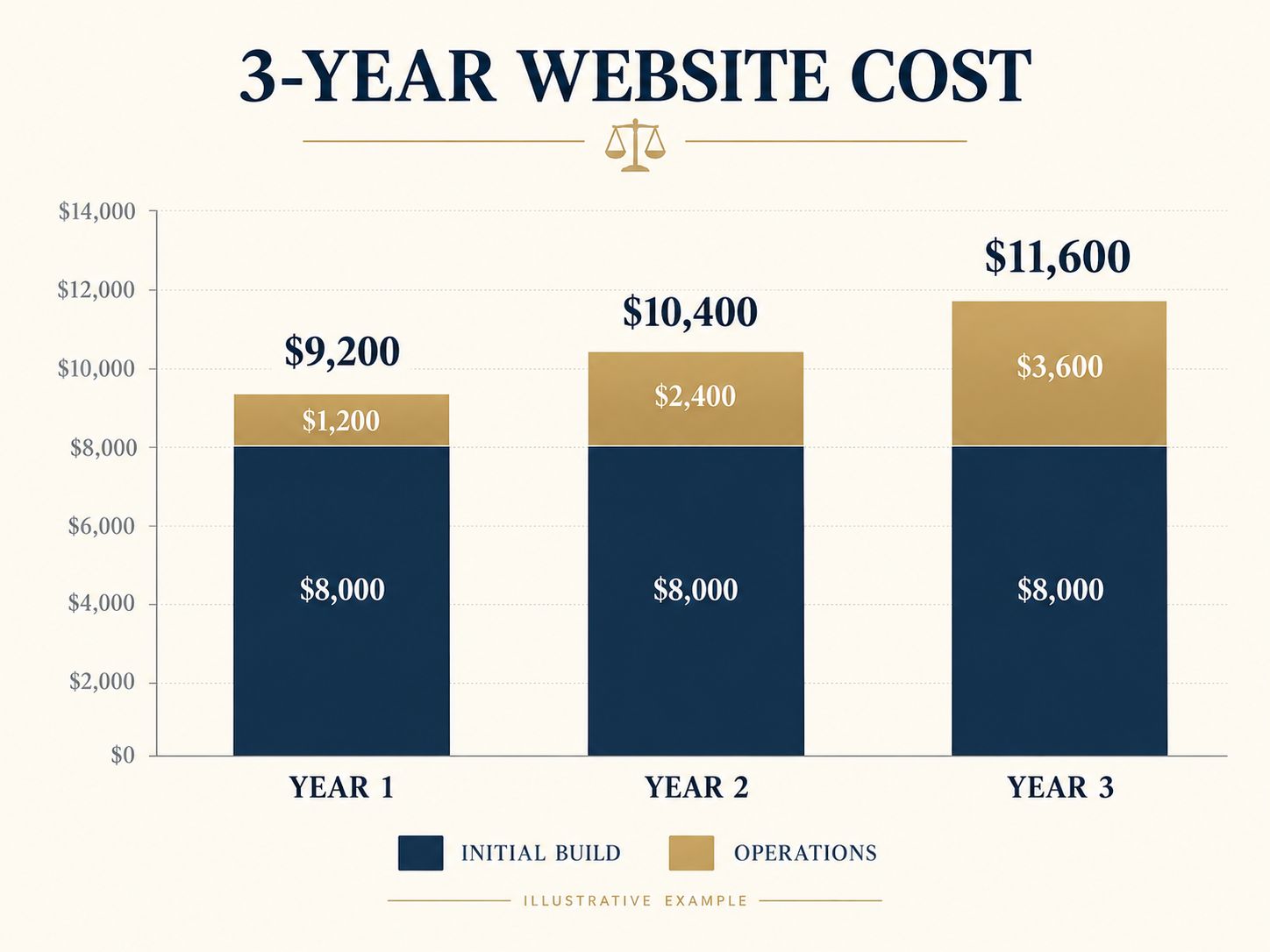
It is also worth asking what happens if you cancel.
Will you retain your domain, website files, content, design assets, and administrative access? Can another developer maintain the website without starting again?
These questions may matter more over three years than a small difference in the initial quote.
Is a $5,000 Law Firm Website Better Than a $15,000 Website?
Not necessarily.
The $15,000 project may include custom branding, professional legal content, extensive testing, and sophisticated integrations.
Alternatively, it may include services that your firm does not currently need.
The $5,000 project might provide everything necessary for a smaller practice—or leave essential items outside the agreed scope.
Rather than judging the price in isolation, compare what you receive.
A useful comparison asks:
- What pages and unique templates are included?
- Who provides and approves the content?
- Are hosting, support, and licensing included?
- Will we own the domain and website assets?
- What testing and launch work will be completed?
- How will additional requests be priced?
A proposal that answers these questions clearly is easier to evaluate than one that promises a premium website without defining its deliverables.
Should Your Firm Choose WordPress or a Website Builder?
A website builder can suit a firm that needs a straightforward website and prefers a managed subscription.
WordPress may provide greater flexibility for custom layouts, content-heavy websites, and integrations, but the firm must arrange suitable hosting and ongoing maintenance. Developers considering WordPress architecture can explore our WordPress architectural deep dive.
Neither choice guarantees better SEO or more clients.
The quality of the implementation, content, and user experience matters. A reliable WordPress website quality control process helps teams test a website before launch.
For additional context, explore WebPlatformLab’s website platform comparisons and Webflow versus Framer comparison.
What Is the Typical Cost of SEO for a Law Firm?
Website development and SEO marketing are related but different services.
Initial technical SEO might cover search-friendly URLs, page titles, navigation, XML sitemaps, indexing checks, and analytics configuration.
Ongoing SEO can involve keyword research, content development, local search improvements, technical audits, and reporting.
Legal SEO retainers vary widely. Firms targeting highly competitive practice areas and cities may require substantially more work than a small referral-focused practice.
Ask the provider to distinguish between basic SEO setup and continuing marketing services. Neither should be represented as a guarantee of rankings.
If you’re comparing implementation approaches, WebPlatformLab’s website performance resources discuss technical considerations that can also affect long-term website management, including optimizing Core Web Vitals on shared hosting.
Law Firm Website Design Cost in the USA and Europe
US and European website projects should be compared using the same scope, not simply converted into a common currency.
Agency specialization, labor rates, project complexity, translations, and ongoing support can affect the final cost.
European projects may also need region-specific privacy, accessibility, and multilingual planning.
When requesting international quotes, confirm whether taxes or VAT are included and who will be responsible for legal content review.
The location of a supplier alone does not establish whether a quotation offers good value.
A Practical Way to Compare Three Website Quotes
Imagine receiving three quotes for a redesign:
| Quote | Price | What to Check |
|---|---|---|
| A | $3,500 | What work is excluded? |
| B | $9,000 | What customization and support are included? |
| C | $18,000 | Which additional deliverables justify the investment? |
These figures are hypothetical.
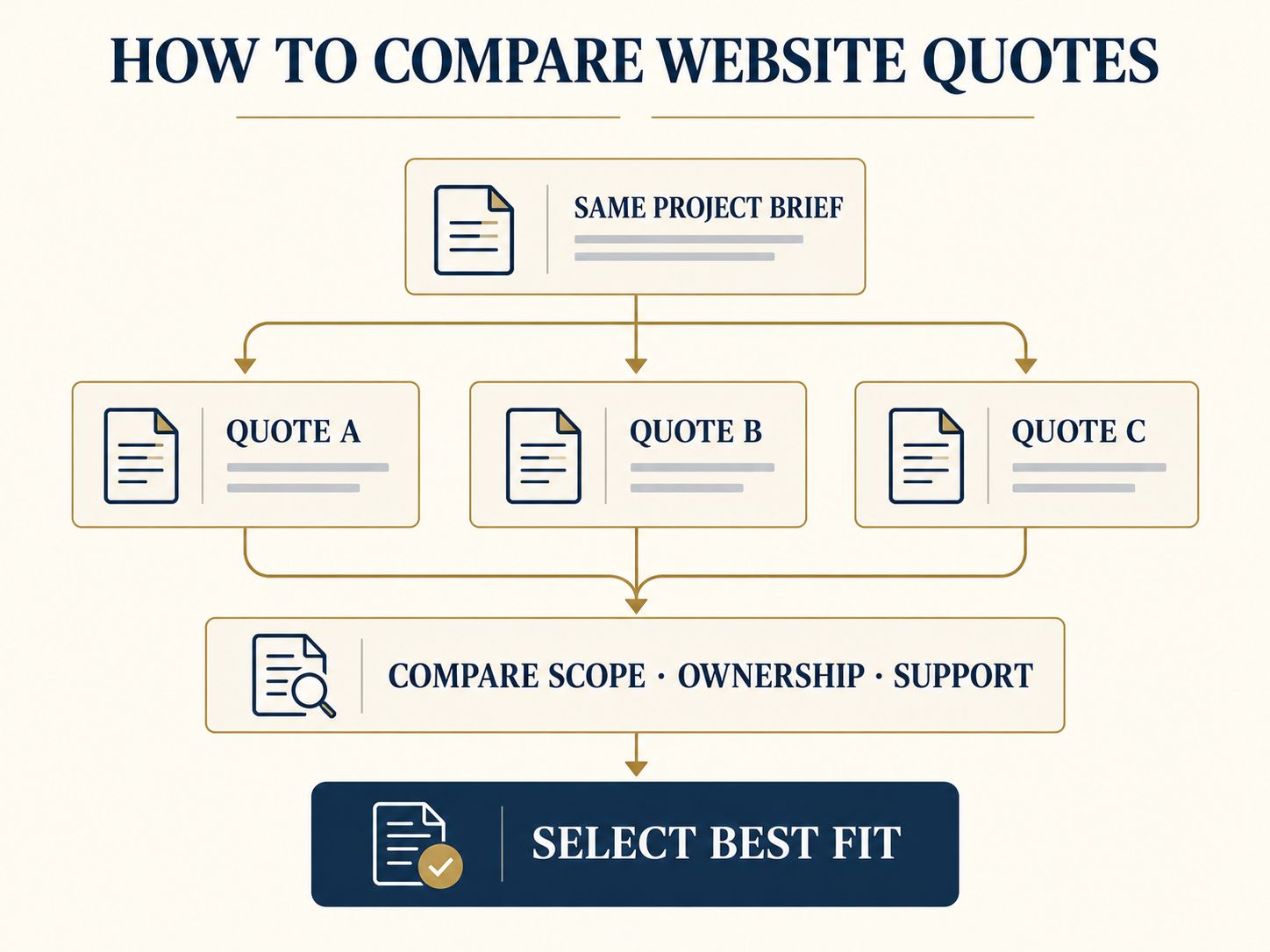
Create a single project brief and send it to each supplier. Specify your pages, content responsibilities, integrations, migration requirements, and preferred support arrangement.
Then compare the quotes against the same brief.
This approach will not eliminate every pricing difference, but it helps reveal why those differences exist.
When Does a Custom Website Become Worth the Investment?
A custom website becomes easier to justify when standard templates cannot support an important business requirement efficiently.
For example, an established firm might need to connect attorney profiles to practice areas and multiple office locations.
Another might need specialized content publishing workflows that allow its marketing and legal teams to collaborate.
In both cases, a custom architecture could create long-term value.
However, adding expensive features without an operational need increases cost and maintenance responsibility without necessarily improving the visitor experience.
The appropriate solution depends on your firm’s goals, not the number of visual features a designer can demonstrate.
How Can You Measure Website ROI?
A law firm website should support a measurable business purpose, whether that is building credibility, attracting qualified inquiries, or helping clients reach the right person.
For a simplified financial evaluation:
ROI = (Website-attributed contribution profit − Website investment) ÷ Website investment × 100
Suppose the first-year website investment is $10,000 and the firm attributes $16,000 in contribution profit to clients acquired through the website.
The simplified ROI would be 60%.
This is a mathematical example, not a prediction of real-world results.
Client attribution may be imperfect, particularly when referrals, advertising, and organic search influence the same decision.
Track qualified inquiries, consultations, clients retained, and attributable business value rather than relying solely on page views.
Frequently Asked Questions
How much is a one-page law firm website?
A one-page site built using a DIY platform may require only a subscription. A professionally custom-designed single-page website can cost several thousand dollars. Dan Gilroy Design, for example, publishes a $3,000–$3,500 range.
How much should I charge for website design?
Estimate the hours and complexity of research, design, development, content integration, testing, and project management. Use a sustainable rate and clearly define what the proposal includes.
How much does website design cost in Bangladesh?
Costs depend on the developer, project scope, and service arrangement. Bangladesh-based developers may offer different pricing structures from US or European agencies, but there is no single verified national average established by the sources used here.
Is a custom law firm website necessary for a solo attorney?
No. A well-executed template can serve a solo practice when the content and functionality are straightforward.
How long does it take to develop a law firm website?
A small template-based project can take a few weeks. More complicated projects may require several months, especially when content approval, integrations, photography, or migration are involved.
Can a law firm website be redesigned without losing search traffic?
Careful migration planning can reduce risks, but preserving rankings is not guaranteed. Existing pages, important URLs, redirects, and tracking should be reviewed before launch. Understanding how 404 errors affect SEO and user experience can also help during migration planning.
Is the cheapest website quote always a bad choice?
No. An inexpensive quote can be reasonable when the scope is simple. The important question is whether the proposal includes all essential work and clearly explains additional fees.
What is the biggest hidden website expense?
Content preparation, maintenance, integrations, and migration work are common areas to investigate. Vendor lock-in can also create long-term costs if the firm cannot easily move to another provider.
Final Thoughts: Choose the Website Your Firm Actually Needs
A law firm website does not need to be the most expensive option to be effective.
What matters is whether prospective clients can understand your services, verify your professional information, and contact you without difficulty.
For a new solo practice, I would prioritize those fundamentals before committing to advanced functionality. For an established firm, I would pay closer attention to content architecture, integrations, migration requirements, and future maintenance.
Use the cost calculator to build an initial budget. Then ask two or three qualified suppliers to quote against the same clearly defined requirements.
Have you recently built or redesigned a law firm website? Share what you paid, what was included, or which unexpected expenses appeared. Your experience could help another firm make a more informed decision.