Dedicated WordPress outsourcing helps agencies and businesses get reliable development support without committing to a permanent in-house hire. But paying someone for 160 hours a month doesn’t guarantee 160 hours of useful work. Before signing a contract, you need to know which hiring model fits your workload, what the arrangement should cost, and how to judge the developer’s technical ability. This guide walks through those decisions, with a practical budget calculator and a WordPress-specific hiring process.
What Is Dedicated WordPress Outsourcing?
Dedicated WordPress outsourcing is an arrangement where an external developer or team provides agreed development capacity to your business for ongoing WordPress projects. You typically pay a recurring fee for allocated hours, availability, or a defined staffing arrangement.
The word dedicated is important, but it is also easy to misunderstand.
One provider might assign a developer exclusively to your company. Another might reserve 80 hours per month from a developer who also serves other clients. Both arrangements may be marketed as dedicated outsourcing.
That is why you should clarify what you are buying before comparing prices.
Imagine an American marketing agency managing twelve client websites. Each month brings landing pages, design changes, plugin issues, WooCommerce requests, and maintenance work. Hiring different freelancers for every task means repeatedly explaining the same website configurations and client expectations.
An ongoing developer can learn those systems and become a consistent part of the agency’s workflow.
The arrangement makes less sense for a business that needs only one small website modification every few months.
What Does a Dedicated WordPress Developer Handle?
The work can include custom theme development, plugin functionality, WooCommerce customization, Gutenberg blocks, API integrations, migrations, maintenance, performance, security improvements, and technical SEO.
The skills required vary considerably.
Someone who builds pages with Elementor may be excellent at producing responsive marketing layouts but have limited experience writing secure PHP plugins. Likewise, a developer specializing in backend integrations may not be the strongest choice for a design-intensive landing page project.
If you’re deciding which capabilities your website actually needs, WebPlatformLab’s WordPress architectural deep dive provides useful background on the broader ecosystem.
Is Dedicated WordPress Outsourcing Right for Your Business?
Dedicated outsourcing is most suitable when you have consistent development work and the ability to manage it. If your needs are occasional or difficult to predict, a freelancer or project-based agency may be more economical.
The question isn’t simply whether you can afford a dedicated developer. It’s whether you have enough useful work to justify reserved capacity.
Choose Your Hiring Model
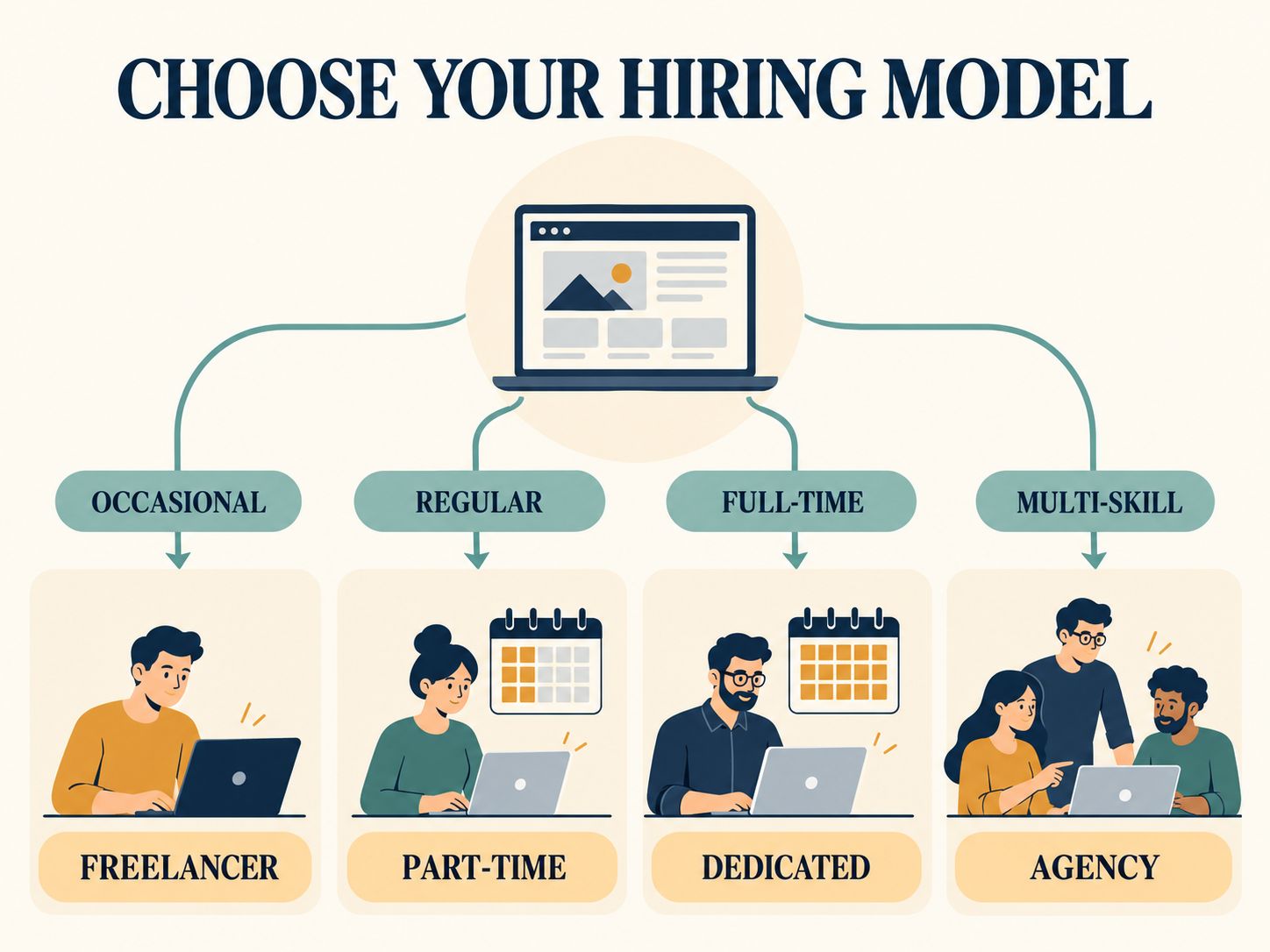
| Your situation | Better starting option | Why |
|---|---|---|
| Occasional fixes and small changes | Freelancer | Pay for individual tasks |
| One complete website redesign | Fixed-price agency or specialist | Defined project scope |
| Regular tasks totaling 40–80 hours monthly | Part-time dedicated developer | Recurring support without a full-time commitment |
| Consistent workload near 160 hours monthly | Full-time dedicated developer | Predictable ongoing capacity |
| Several concurrent projects requiring different skills | Dedicated team or agency | Access to several specialists |
| Strategic systems requiring close internal oversight | In-house or hybrid team | Greater direct organizational control |
The hour ranges are illustrative workload scenarios, not industry rules or minimum contract requirements.
The Four-Week Workload Test
Before hiring, examine development work from the last four weeks.
Record how many hours were spent on feature development, content changes, bug fixes, maintenance, meetings, and testing. Also note tasks that were delayed because no developer was available.
If you already have enough recurring work for a part-time or full-time developer, dedicated outsourcing may be worth evaluating.
If tasks are unpredictable, start with a smaller monthly allocation and negotiate how additional hours are approved.
Pro Tip: Don’t confuse a long backlog with a steady workload. A backlog of one-time projects may be better handled through fixed-price contracts than a permanent monthly retainer.
How Much Does Dedicated WordPress Outsourcing Cost in 2026?
The cost depends on the developer’s experience, technical responsibilities, location, monthly hours, and additional services such as project management and testing.
There is no universal hourly rate that accurately represents every dedicated WordPress outsourcing provider.
An experienced WooCommerce engineer working on payment processing, custom APIs, and order synchronization has different responsibilities from a developer who primarily maintains brochure websites.
Rather than presenting an unsupported market-average price, use your prospective provider’s quotation to calculate the total commitment.
WordPress Outsourcing Budget Calculator
Adjust the assumptions using a real quotation.
| Budget component | Illustrative value |
|---|---|
| Hourly developer rate | $40 |
| Monthly development hours | 120 hours |
| Additional QA/management allowance | 10% |
| Contract duration | 3 months |
| Base monthly development | $4,800 |
| Estimated monthly commitment | $5,280 |
| Estimated total contract cost | $15,840 |
Calculation: Hourly rate × monthly hours × (1 + QA/management allowance ÷ 100) × contract duration.
Illustrative planning estimates only. Excludes taxes, recruitment, software licenses, hosting, payment fees, and unexpected rework. Monthly retainers may not use an hourly billing structure.
What Makes One Quote More Expensive Than Another?
Price differences often reflect more than the hourly rate.
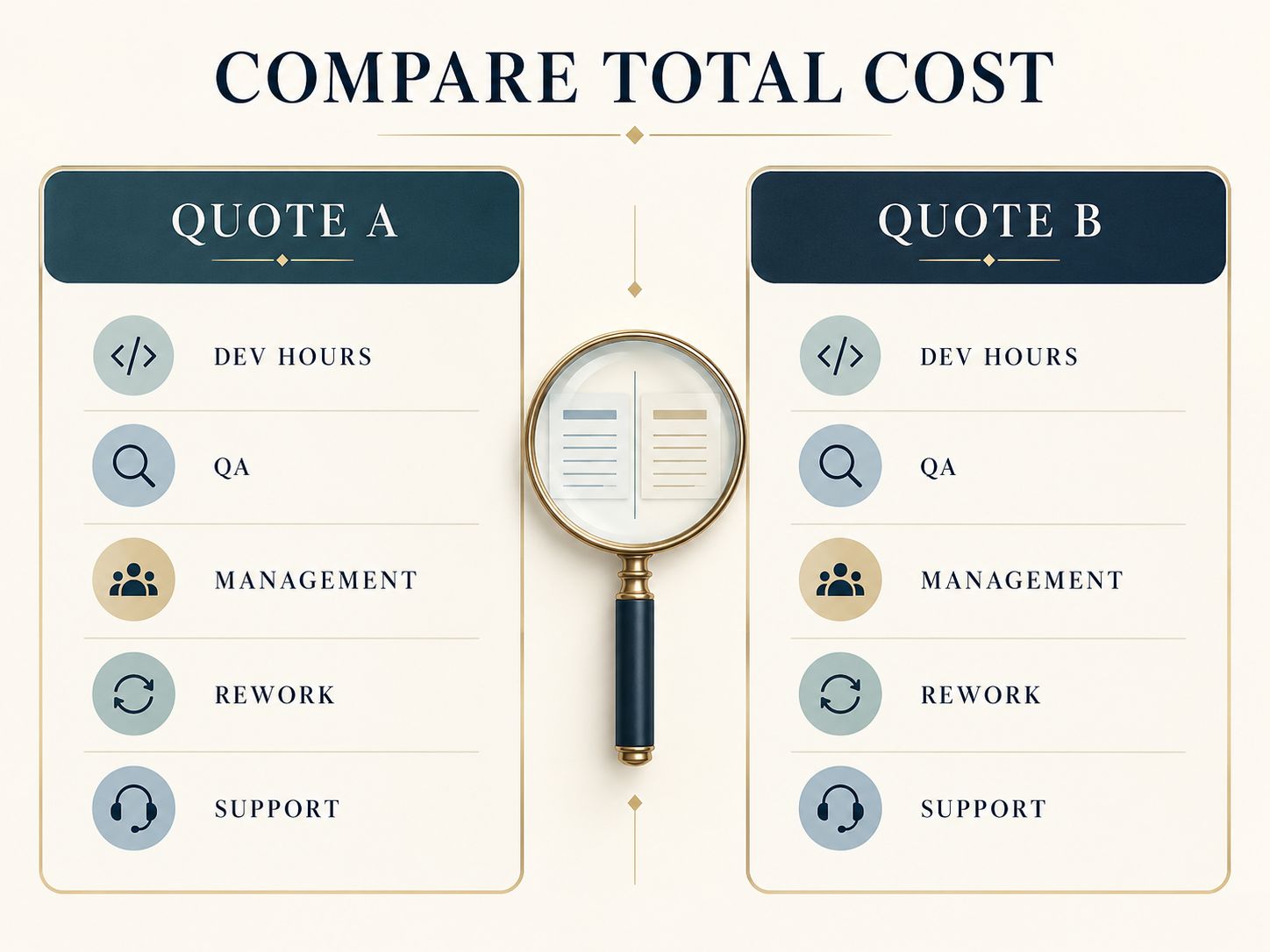
One provider may include a project manager, code review, quality assurance, documentation, and replacement coverage. Another may offer only development hours.
Suppose two providers both promise a WordPress developer for 120 hours per month.
The first includes testing and deployment support. The second charges separately for those tasks. Even if the second developer’s hourly rate is lower, the total bill may be higher once those services are added.
Ask providers to specify the following before comparing their proposals:
- Guaranteed working hours and availability.
- Developer experience and technical specialization.
- Whether meetings, testing, and documentation are billable.
- Unused-hour rollover and overtime rules.
- Emergency response arrangements.
- Minimum contract length and cancellation terms.
Warning: A claim such as “70% cheaper WordPress development” means little unless the provider identifies the comparison, scope, and services included.
How Do You Compare Dedicated Developers, Freelancers, and Agencies?
The most useful comparison is not which model is cheapest. It is which model creates the least friction for the kind of work you regularly need.
A freelancer can be excellent when you have a clearly defined task and can accept some variation in availability.
A dedicated developer offers continuity. That matters when the person needs to understand older code, previous design decisions, hosting arrangements, and custom integrations.
An agency can supply more skills, but you should understand who is assigned to your project and how much direct access you’ll have to the technical team.
The Three Common Delivery Models
| Model | Typical use |
|---|---|
| Freelancer | One defined task or project |
| Dedicated | Recurring development capacity |
| Agency | Several coordinated disciplines |
An agency managing WooCommerce stores, for example, may prefer an experienced dedicated developer for routine store modifications while hiring a specialist to handle an unusually complicated payment integration.
That hybrid approach is often more practical than expecting one developer to be equally skilled at everything.
You can review the WooCommerce cost comparison when preparing a role that involves store architecture and integrations.
Which WordPress Tasks Are Worth Outsourcing?
Most WordPress development work can be outsourced, but critical functionality deserves additional oversight.
| Work type | What to request | How to accept the work |
|---|---|---|
| Custom themes | Responsive, editable templates | Design, accessibility, and mobile testing |
| Custom plugins | Maintainable functionality | Code review and security tests |
| Gutenberg blocks | Editor-friendly components | Editing, rendering, and responsive tests |
| WooCommerce | Store and checkout improvements | Complete test-order workflows |
| Performance | Reduced bottlenecks | Comparable before-and-after measurements |
| Technical SEO | Redirects, metadata, canonical rules | URL and crawlability checks |
| Migration | Successful environment transfer | Data integrity and rollback verification |
| Maintenance | Updates and support | Change logs and tested recovery |
Custom Themes and Page Builder Work
A custom theme should do more than reproduce a design.
Editors need to manage content without accidentally destroying the layout. Templates should remain maintainable when business requirements change.
For responsive implementation, developers need to agree on consistent dimensions for images and layout elements.
For custom styling, controlled design implementation also matters. For example, our guide to creating two-column layouts in SureForms covers a practical WordPress layout requirement.
Custom Plugins and Integrations
Plugin development requires more technical scrutiny than a visual page update.
Ask how the developer handles authentication, authorization, database access, input validation, output escaping, and integration failures.
A plugin that works in a demo may still fail when several users submit requests at the same time or an external service becomes unavailable.
Review error handling and maintenance documentation before accepting the deliverable.
For projects using Advanced Custom Fields, the guide to the ACF render block preview action illustrates a more specialized WordPress implementation topic.
Projects that require custom content relationships may also involve tasks such as retrieving child categories with JetEngine.
WooCommerce Development
WooCommerce work often connects frontend changes to sensitive business operations.
Before approving a custom checkout feature, test successful and failed payments, duplicate submissions, order statuses, refunds, inventory changes, and confirmation emails.
Don’t assume a checkout works just because its design looks correct.
Performance, Maintenance, and Security
Outsourcing a performance project should begin with measurements and specific targets.
For example, a developer might investigate render-blocking assets, unnecessary database queries, oversized images, or caching problems.
Use comparable testing conditions rather than accepting screenshots from different devices or environments as proof of improvement.
For deeper technical context, review optimizing Core Web Vitals on shared hosting and the guide to B2B website speed.
WordPress configuration work also requires careful review of the actual hosting environment. Generated settings and automation tools do not replace security expertise.
When evaluating website image delivery, consider the practical guidance in Does Alt Text Help SEO?.
Migrations and Technical SEO
A site migration needs more than a successful file transfer.
The developer should test important URLs, preserve data relationships, verify media and forms, and prepare a rollback plan.
For URL changes, WebPlatformLab’s 301 redirect guide is a relevant resource.
Broken destinations should also be checked after deployment. The 404 error troubleshooting guide explains the effects of missing pages and how to investigate them.
For a practical WordPress staging example, see the guide to setting up a WordPress staging subdomain on Blacknight.
How Do You Hire a Dedicated WordPress Developer Without Guesswork?
The safest hiring process is to check relevant experience, evaluate technical judgment, and run a small paid assignment before committing to a long contract.
A portfolio matters, but it doesn’t tell you everything.
A developer might have built an impressive website using an established page builder. That doesn’t necessarily mean they can create a secure custom plugin or investigate a slow database query.
Start by matching the candidate’s actual experience with your technical requirements.
Five Questions Worth Asking During the Interview
- What WordPress projects have you built that are technically similar to ours?
- How do you manage custom functionality so future WordPress updates don’t break it?
- How do you handle a production bug when you cannot immediately identify the cause?
- What tests do you run before deploying a WooCommerce modification?
- How would another developer continue your work if you became unavailable?
The last question is particularly useful. It reveals whether the candidate thinks about documentation, maintainability, and shared ownership.
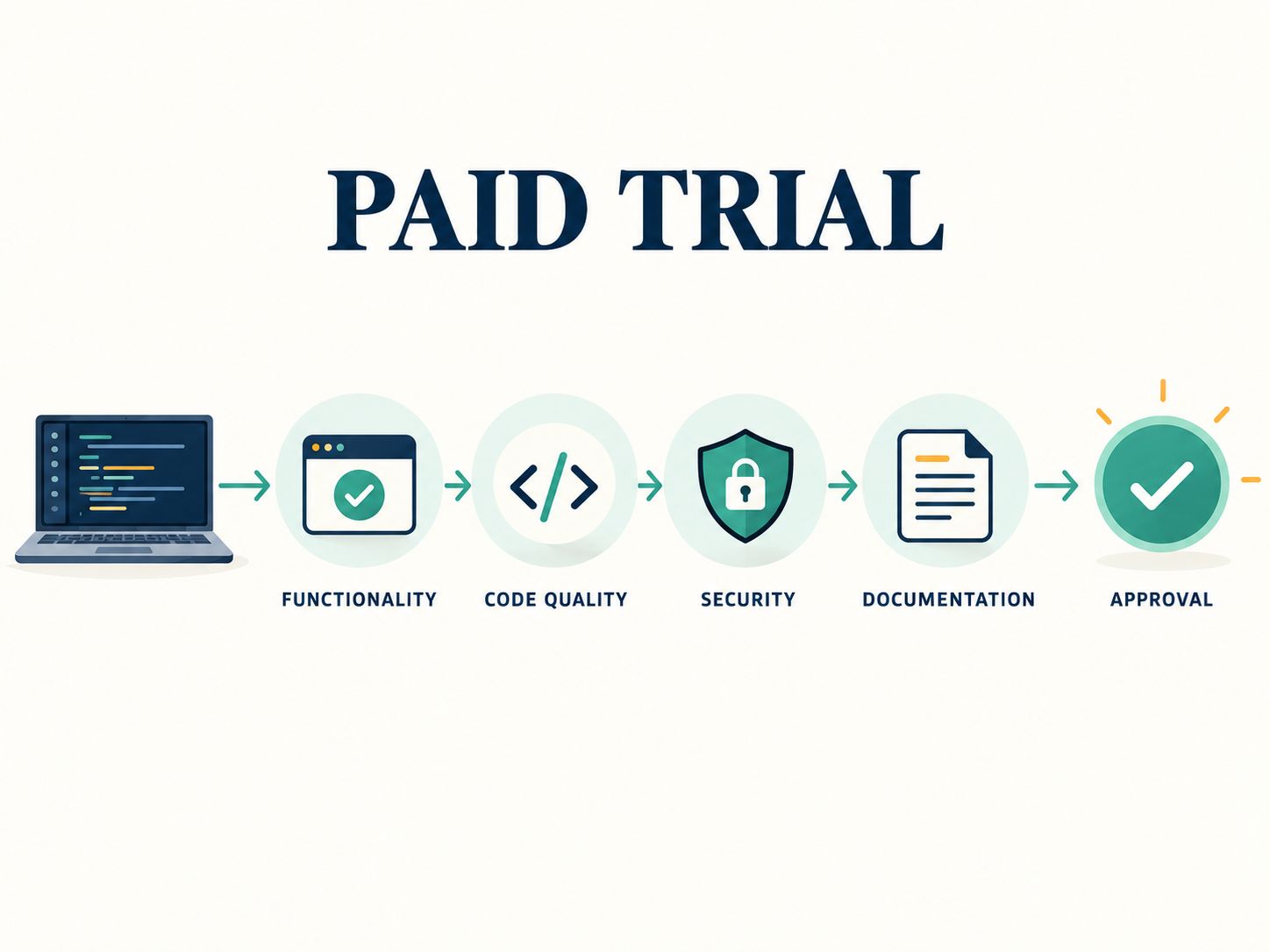
Give the Developer a Realistic Paid Trial
For custom development, a trial might involve creating a Gutenberg block with editable fields and responsive frontend behavior.
For WooCommerce, it could involve investigating a reproducible staging issue.
For maintenance, ask the developer to diagnose a plugin conflict and document the proposed resolution.
The assignment should have a clear deliverable, agreed time budget, and objective acceptance criteria.
A Practical Hiring Scorecard
| Evaluation criterion | Weight |
|---|---|
| Relevant WordPress expertise | 25% |
| Code quality and security | 25% |
| Problem solving | 20% |
| Communication | 15% |
| QA and documentation | 15% |
Rate each area from 1 to 5 after the interview and trial. A high score may indicate a promising candidate, while weaker areas should be investigated before hiring.
This is an editorial evaluation framework, not a scientifically validated hiring instrument. References and technical evidence remain essential.
Expert Advice: A candidate who can explain the limits of their expertise is often easier to work with than someone who claims to be an expert in every WordPress technology.
What Should Be Included in a WordPress Outsourcing Contract?
A good contract removes uncertainty about working arrangements, deliverables, costs, ownership, and what happens when the engagement ends.
Pay attention to whether your agreement includes the actual named developer, defined capacity, time-zone overlap, overtime pricing, support hours, subcontracting rules, and replacement arrangements.
You should also agree on acceptance procedures. Without them, a developer may consider a task finished when the code runs, while your business expects it to be tested, documented, and deployed.
Code Ownership and Handover
Your organization should retain appropriate control over its domain, hosting, source repositories, backups, and essential service accounts.
Custom deliverables and third-party licenses should be addressed expressly in the contract. Legal ownership is not determined simply by who paid for the development time.
Require documentation for important custom functionality, especially integrations and deployments.
Security and Data Privacy
Use separate user accounts, multifactor authentication, restricted permissions, and staging environments where appropriate.
For EU businesses, an outsourcing relationship involving personal data may require processor arrangements under the GDPR. International transfers can involve further obligations, including appropriate transfer safeguards. The European Commission GDPR guidance explains these responsibilities.
US businesses should assess applicable state and sector-specific requirements as well.
For sensitive systems, obtain legal and security review before granting production access.
What Are the Biggest Risks of Dedicated WordPress Outsourcing?
The greatest risks are poor code quality, unclear responsibilities, communication problems, insufficient workload, and dependence on one external developer.
| Risk | Early warning | What to do |
|---|---|---|
| Underused capacity | Few tasks completed despite reserved hours | Reassess monthly allocation |
| Weak code quality | Frequent regressions and undocumented fixes | Require technical review |
| Communication issues | Missed updates and misunderstood requirements | Set a written reporting process |
| Security problems | Shared credentials or unreviewed production access | Apply least-privilege controls |
| Developer dependency | One person controls every critical account | Maintain organization-owned access |
| Hidden costs | Additional fees appear after work begins | Define inclusions and change control |
What Do Community Discussions Suggest?
Agency owners and developers regularly discuss the challenges of outsourcing work that involves inherited code, unclear specifications, shifting client requirements, and unfamiliar development environments.
These concerns are useful when designing a hiring process, but isolated Reddit or social-media experiences should not be presented as statistically representative.
The practical lesson is straightforward: test how a developer communicates, documents, and resolves a real issue rather than relying exclusively on testimonials.
How Should You Manage an Outsourced WordPress Developer?
Effective management depends on clear tasks, regular reviews, and measured outcomes—not constant monitoring of activity.
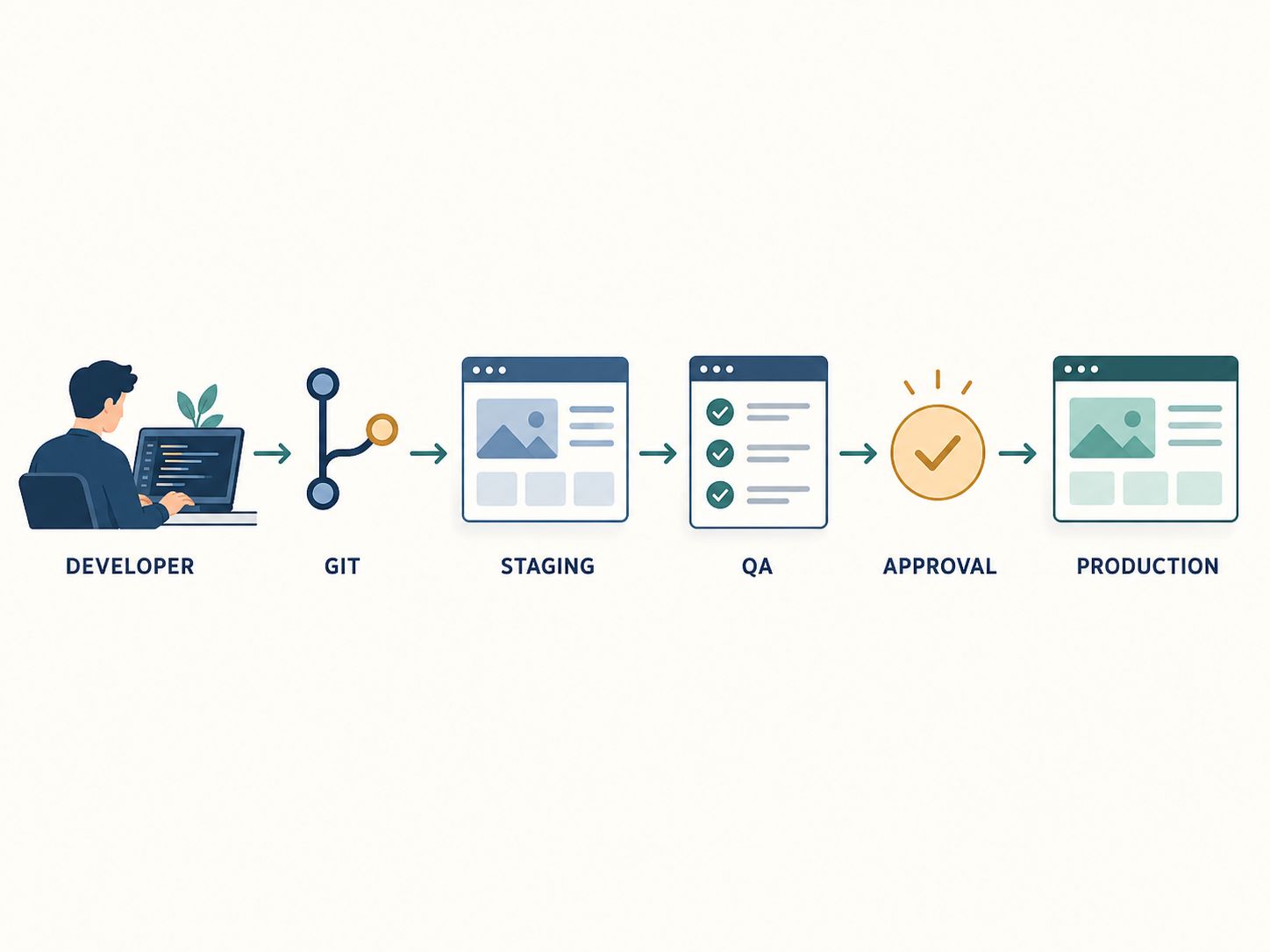
Use one shared task board and establish acceptance criteria before development starts.
For every substantial task, define what needs to change, which environments are affected, what must be tested, and who can approve deployment.
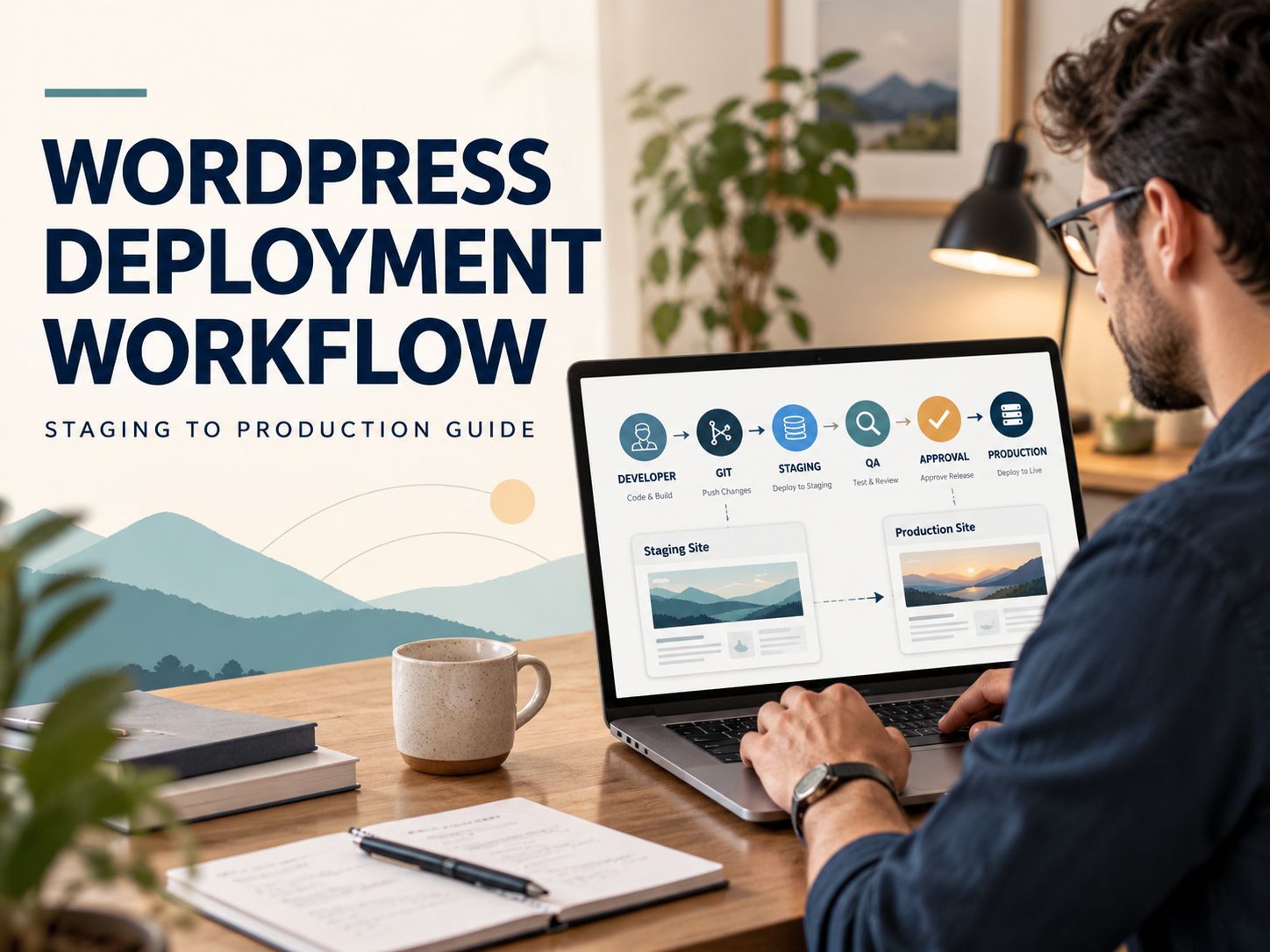
A reliable workflow follows this sequence:
- Requirements
- Development
- Code Review
- Staging QA
- Deployment
- Documentation
Track recurring defects, task completion, response times, and documentation quality.
Avoid making raw hours or lines of code your sole measure of performance. A developer who removes a fragile workaround may create more lasting value than one who introduces a large quantity of new code.
For additional technical evaluation guidance, review WordPress website quality control.
When assessing your long-term technical architecture, the comparison of server-side rendering and static islands offers additional context for implementation decisions.
Is Bangladesh a Good Choice for WordPress Outsourcing?
Bangladesh can be a suitable outsourcing destination for businesses in the United States and Europe, particularly when a developer’s technical expertise, communication, and availability match the project.
However, choosing a provider based on nationality or assumed regional pricing alone is not a reliable hiring strategy.
Evaluate the person or company responsible for the work. Ask to meet the developer, inspect relevant projects, understand the testing process, and confirm practical time-zone overlap.
Which WordPress Development Company Is the Best in Bangladesh?
There is no objectively established single best WordPress development company for every business.
The right partner for Elementor landing pages may not be the strongest choice for a custom WooCommerce integration or WordPress multisite project.
Request relevant references and carry out an actual technical evaluation. A directory position or self-reported project count should not decide the contract.
Is WordPress Outdated in 2026?
No. WordPress remains under active development, including maintenance and security updates.
As of October 12, 2026, the official release archive identifies WordPress 7.1.3 as the latest stable release, published October 6, 2026. You can check its release history through the official WordPress release archive.
WordPress can still be an appropriate choice for custom publishing systems, business websites, WooCommerce stores, and content-rich applications.
The risk is not using WordPress itself. It is leaving outdated software, unsupported extensions, and poorly maintained custom functionality in place.
Before assigning major development work, compare your technical needs with the platform’s capabilities and your team’s ability to maintain them.
For broader platform planning, the Umbraco to WordPress migration guide provides a related CMS perspective.
What Does a Successful WordPress Outsourcing Engagement Look Like?
A good outsourcing arrangement should improve delivery predictability without reducing your control over the website.
Consider this illustrative scenario.
A European digital agency manages ten WordPress websites. It regularly handles page changes, plugin maintenance, new landing pages, and occasional custom development.
The agency chooses a part-time dedicated developer rather than hiring separately for each task.
The first month includes a technical audit, a small paid development assignment, and the creation of a shared task process.
The agency retains its hosting and repository access. The developer commits changes through version control and provides staging previews for approval.
After the first month, the agency reviews whether tasks were completed to standard, whether communication was consistent, and whether the contracted hours were used productively.
If the workflow succeeds and the backlog grows, the agency can consider increasing capacity.
If most hours go unused, the agency may be better off with a smaller retainer.
This is an illustrative decision scenario, not a claimed client case study or a reported financial outcome.
A WordPress Developer’s Perspective
From my work with WordPress themes, plugins, WooCommerce, CMS implementation, and website optimization, I consider maintainability one of the most important factors in long-term development.
A working website is not necessarily an easily maintained website.
When assessing development quality, I pay attention to how custom functionality is organized, whether future WordPress updates can be handled safely, and whether another developer can understand the implementation.
For outsourcing, that leads to a practical recommendation: judge technical work by what it delivers today and how safely it can be supported tomorrow.
Frequently Asked Questions
What are the two types of outsourcing?
Outsourcing is commonly described as onshore and offshore, although nearshore is also widely recognized. It can also be categorized by engagement structure, such as project-based outsourcing and dedicated staffing.
How much does it cost to hire a WordPress developer?
Costs vary according to experience, location, specialization, and engagement terms. Use written quotations and calculate your full project or monthly cost rather than relying on a single advertised average.
Can I hire a dedicated WordPress developer part-time?
Yes. Many outsourcing arrangements provide an agreed number of monthly hours rather than a full-time employee-equivalent schedule. Confirm availability, rollover, minimum commitment, and overtime rules.
Is dedicated WordPress outsourcing better than hiring in-house?
It depends on your workload, management capabilities, and business requirements. Outsourcing offers staffing flexibility, while in-house developers may provide closer organizational integration.
What is white-label WordPress outsourcing?
White-label outsourcing allows an external provider to deliver WordPress development services on behalf of an agency, generally under the agency’s branding and contractual arrangements.
Can I outsource WooCommerce development safely?
Yes, provided the developer has relevant experience and you have appropriate access controls, staging, testing, and deployment procedures. Checkout and order-related changes require particularly careful verification.
How do I know if a WordPress developer is qualified?
Inspect relevant completed work, review their technical approach, conduct an interview, and use a paid trial with objective acceptance criteria.
What happens if my dedicated developer leaves?
Your contract should address replacement and handover. Keep code, documentation, credentials, and infrastructure access under organizational control so another qualified developer can continue the work.
Final Verdict: Should You Choose Dedicated WordPress Outsourcing?
Dedicated WordPress outsourcing is most valuable when your business has regular development work and can provide clear requirements, technical review, and an organized delivery process.
It is not automatically the least expensive option, and it is not the right answer for every website.
If your needs are occasional, hire for individual projects. If your work is predictable and recurring, consider dedicated capacity. If you need several specialist disciplines, compare managed agencies and dedicated teams.
Start with a paid trial, confirm what your contract includes, and establish ownership and handover responsibilities before making a long-term commitment.
The best outsourcing arrangement isn’t the one with the most impressive promise. It’s the one that produces dependable work and leaves your website easier to operate.
Have you worked with an outsourced WordPress developer or agency? Share what worked, what went wrong, or what you wish you’d asked before hiring in the comments.